

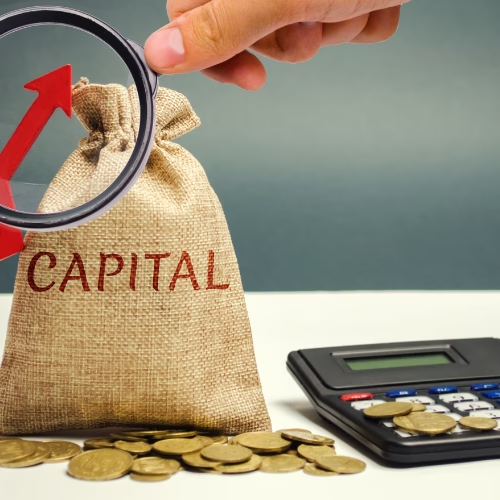
People tend to use “money” and “capital” like they mean the same thing, but in economics and finance, these words actually point to two pretty different ideas. If you mix them up, it can lead to mistakes—like thinking too short-term, or not really getting how real wealth is built and lasting wealth is preserved.
Money, first off, is basically a tool. It’s how we keep score, trade stuff, and hang on to value. You use it to buy things, compare prices, settle debts—all that. But money just sitting around doesn’t really do anything. Sure, holding cash keeps your options open and can feel safe, but it doesn’t grow on its own. And it doesn’t even reliably hold its value—prices go up (inflation), currencies get shaky, or your savings just don’t keep up with real costs. At its core, money is about flexibility; it lets you act quickly or stay on the sidelines if you want, but again, there’s no automatic growth there.
Capital’s actually something different. It starts as money, but only after you commit it to some kind of productive use—like investing in a business, building something, funding research, or even just buying assets with plans for future returns. That’s when money becomes capital. And unlike money, capital isn’t just sitting still. It’s out there working, taking on risks, and exposed to the ups and downs of markets or even shifts over decades. Money is all about what you can do right now. Capital’s more about what might happen down the road.
What does this mean in practice? Just having a pile of cash doesn’t actually make you powerful, economically speaking. Someone—or even a whole country—can be sitting on loads of money and still not get anywhere unless they turn it into capital. On the flip side, people or places with less ready cash but lots of investment and productive capacity can take off fast. Basically, capital is what turns plans and potential into real stuff: new products, homes, ideas, and companies. That’s where growth really comes from.
Time’s a huge part of the story. Money is for today; capital is about tomorrow. When you move money into capital, you’re choosing to set it aside now for something you hope will pay off later. That wait isn’t just a nuisance—it’s the whole point. Earning real returns on capital always takes patience, some discipline, and a bit of guts since nothing’s guaranteed. The farther out you look, the more your capital is affected by big trends like technology, changes in the workforce, new rules, and the economy as a whole.
Risk is another big difference. If you want to avoid risk, you hold money. If you’re willing to take some on, you use capital. With money, you might dodge market swings, but inflation might eat away your savings, or you might miss chances for growth. Capital, on the other hand, faces all kinds of risks—markets can drop, businesses can fail, stuff can go wrong. But that’s the only way value gets created. Good financial management isn’t about dodging every risk, but about picking the right ones and knowing how long to stick with them.
There’s also this idea of liquidity, which is just a fancy way of saying how easily you can get to your money if you need it. Money is by nature liquid—you can spend it or move it any time. Capital? Not so much. Whether it’s stocks, real estate, or longer-term investments, it’s often not so easy—or cheap—to turn that back into cash in a hurry. But actually, that kind of illiquidity can be a good thing. It keeps people from making snap decisions and pushes them to stick to longer-term plans.
It also helps explain why financial inequality works the way it does. Folks who only have cash are stuck relying on liquidity. Those who own capital control the stuff that actually makes the economy tick—like factories, R&D, or property. Capital earns returns, and when those returns are put back to work, they grow over time. That’s how the gap between just having money and controlling capital keeps getting wider.
Zoom out to a country level, and you see the same thing. A nation with lots of savings but not much actual investment might just spin its wheels. Meanwhile, a place with strong capital markets and even modest savings can see real, steady growth. This is why institutions—the rules, property rights, finance systems—are so important. They decide whether money can reliably become capital, and whether that capital actually has the chance to do its job.
When it comes to policy debates, this distinction helps clear things up. Pumping more money into an economy might boost demand for a while, but you don’t get lasting growth unless people are actually putting money to work as capital. Cheap loans or loose credit, on their own, don’t guarantee people will invest in real things—sometimes that cash just bounces around or even fuels bubbles instead.
And for individuals, it’s pretty straightforward too. Money keeps you safe; capital pushes you forward. You need both for solid finances, but if you don’t see the difference, you can easily end up off-balance: overly cautious with cash and missing growth, or all-in with investments and end up exposed when things go sideways. The trick is knowing when to stay liquid and when to tie your money into longer, more productive investments.
At the end of the day, money’s just a tool you use. Capital is a whole process—it’s where you actually build lasting value. It’s not about the pile of cash you’ve got right now, but how well you put that money to work for the future that really counts.
[ Membership ]