Energy Shock and the Return of Hybrid Work: Why the Oil Crisis Could Reshape the Workweek Again

When global politics become unstable, economies often return to strategies used in past crises. This seems to be happening now. Recent tensions in the Middle East, especially near the Strait of Hormuz, one of the world’s key shipping routes, are raising concerns about oil supply disruptions, energy security, and higher transportation costs. If oil supplies… Continue reading

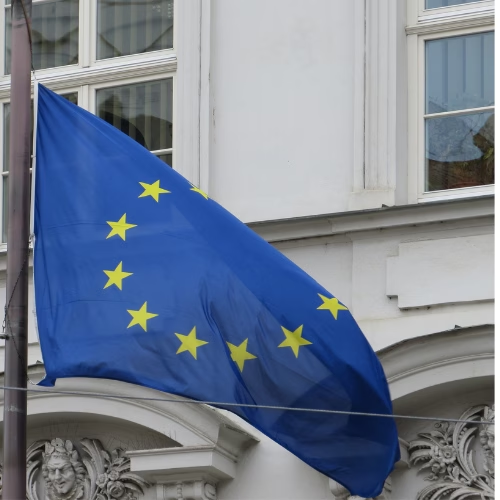
Why EU Regulators May Eventually Take a Closer Look at Package Tourism

For decades, the European package holiday industry has offered consumers a straightforward value: pay more upfront for coordination, security, and a single point of accountability. Instead of booking separate flights, hotels, and transfers, travelers purchase certainty. That logic helped justify strong legal protection under the EU Package Travel Directive. The idea was straightforward: if you’re… Continue reading

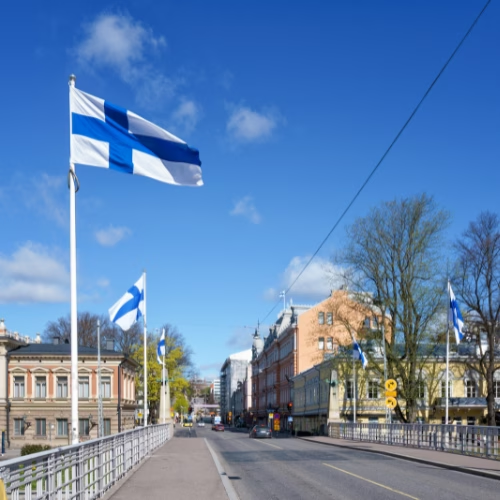
Finland, the Border, and the Calm Nobody Talks About

Let’s start with an obvious icebreaker. If you look past the usual photos of the Finnish military, you’ll see something different: young, energetic, confident people, many of them women, who genuinely seem to want to be there. These aren’t Hollywood hero shots or displays of loud nationalism. Instead, you see healthy, disciplined, and very capable… Continue reading

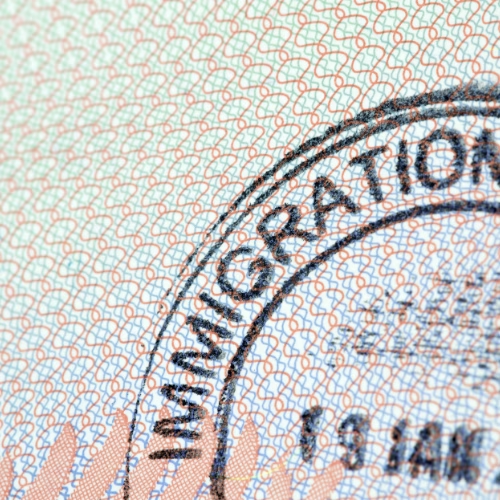
Selective Immigration or Economic Decline: A Policy Trade-Off

Across advanced economies—from Japan and Finland to the United States and much of Northern Europe—immigration policy is drifting in a strange direction. Governments openly admit they face severe labor shortages, especially in care work, healthcare, logistics, education, hospitality, and other people-centered sectors. Yet at the same time, they tighten entry rules, speed up deportations, shorten… Continue reading

When Things Look Worst, Opportunity Usually Sits Closest

At first glance, Finland doesn’t seem like an attractive place to invest right now. Public debt has risen faster than most people expected. Unemployment is among the highest in the EU. Many skilled and mobile immigrants have already left. In addition, some U.S. and international investors are still cautious, pointing to geopolitical risks linked to… Continue reading

France’s Real Crisis Is Confidence, Not Collapse

France is not falling apart. Institutions function, public services continue, and families are still protected from the worst economic shocks. Social order, though sometimes noisy, remains in place. On the surface, things work. But underneath, there is a quieter issue: a slow loss of confidence—not in France itself, but in whether the system can still… Continue reading

Can a city remain global once its destiny turns national? Hong Kong: From Global Financial Hub to a China-Focused Capital Platform

For years, Hong Kong held a unique place in the global economy. It wasn’t just another city or financial center. Instead, it was a crossroads where capital, law, and trust came together in a way you didn’t see elsewhere. Western investors relied on Hong Kong’s legal system, while Chinese companies valued their access to international… Continue reading

Why Government Support Doesn’t Guarantee Success

People often see government support as a kind of gold star for a company. If a startup announces it’s landed some public money, gotten a tax break, or picked up backing from a big national innovation agency, the outside world tends to assume the hardest part is over. The thinking goes: “Well, if the government… Continue reading

Finland 2019: The Calm Before Structural Stress

On the surface, Finland in 2019 seemed like it had everything under control. The economy was ticking along, growth numbers were in the black, and unemployment kept moving down. Startups were still getting their moment in the spotlight, drawing applause at conferences, and Helsinki kept its reputation as this peaceful, smoothly-run place to live or… Continue reading