
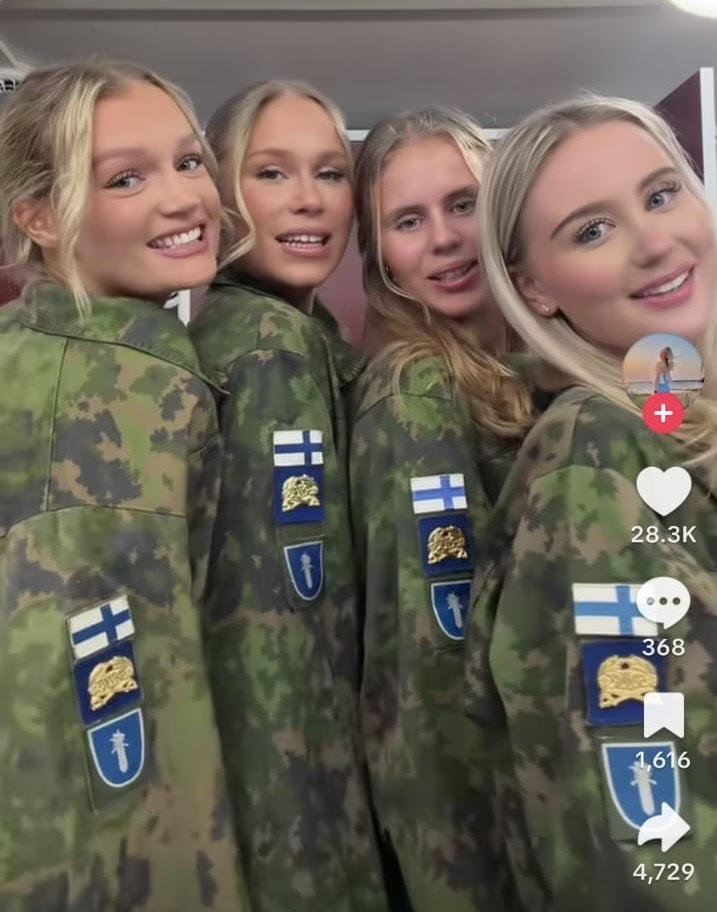
Let’s start with an obvious icebreaker. If you look past the usual photos of the Finnish military, you’ll see something different: young, energetic, confident people, many of them women, who genuinely seem to want to be there. These aren’t Hollywood hero shots or displays of loud nationalism. Instead, you see healthy, disciplined, and very capable individuals. That alone says a lot about how Finland approaches security: calm competence is valued over loud panic.
Now, let’s talk about what international investors keep focusing on: the eastern border.
Finland has been Russia’s neighbor for centuries—not just a few years or decades, but centuries. If there were an award for living next to a complicated neighbor without losing your mind, Finland would have plenty of trophies. Here, diplomacy isn’t just a concept. It’s a way of life.
The fear story vs. the actual math
Wars don’t begin because of feelings, headlines, or social media anxiety. They start with cost-benefit calculations. After Ukraine, it makes little economic or strategic sense for Russia to open another front.
Finland doesn’t offer quick wins or easy opportunities. There’s no clear leverage or special advantage that would make the cost worthwhile. Instead, Finland presents challenges: a harsh climate, robust infrastructure, social cohesion, and now NATO membership.
From a cold strategic point of view, the likelihood of an attack on Finland isn’t “low because we’re optimistic.” It’s low because it’s important to say this clearly: ordinary Russian people are not cartoon villains. Many are highly educated, skilled, and culturally rich. Like most people, they would choose peace over war if they could. Governments start wars; people bear the consequences—the burden.
Investors are worrying about the wrong thing.
The main risk to Finland is not the border. It’s what happens inside: high taxes, strict labor rules, slow permitting, and unused industrial capacity hurt investment interest much more than geography ever could. Finland already has many things other countries wish for—it has
- Political stability
- Rule of law
- Clean energy
- Strong infrastructure
- A population trained to work quietly and efficiently.
What’s missing is stronger, more effective policy design.
If the Finnish government wants to turn today’s geopolitical attention into real investment, the steps are simple, and honestly, they are overdue: effective corporate taxes for long-term investors.
- Offer cheap, long-lease industrial land, especially for energy-hungry projects.
- Speed up permitting without trashing environmental or safety standards
- Actively put idle Nokia-era industrial sites back to work
Where the real upside is
Forget the drama. Finland’s strengths are real, steady, and, yes, a bit boring, but in a way that makes them attractive for investment: centers: cold climate + clean energy = structural advantage.
- Wood & bio-materials: from furniture to green construction to circular materials
- Paper & packaging: still relevant globally, now with a sustainability edge
- Sauna & wellness: a real cultural export that can grow, not just a passing trend & industrial tech: especially for tough, unforgiving environments
- Tourism: not mass tourism, but premium, seasonal, nature-heavy experiences
These aren’t. These sectors don’t disappear at the first sign of trouble. They depend on stability.
A point underneath the half-smile
Worrying about the border is an easy story to tell, but it doesn’t help much. Finland has survived wars, recessions, the fall of its top tech company, and big demographic shifts. The next step isn’t more fear or caution. It’s a confident policy.
Security here isn’t loud. It doesn’t have to be. It’s already baked into the system—professionally, and yes, sometimes smiling back at you. If Finland lowers internal barriers and actively welcomes investment, investors will come. They’ll be attracted not despite the border, but because the rest of the country works well—the country functions really well!
[ Membership ]