


Finland’s recent move to bring in more workers from the Philippines is where three pretty different forces collide: you’ve got an aging country desperate for employees, a service industry that can’t find enough people locally, and a migration system where “staying” isn’t a given—you have to keep proving you deserve to remain. Staffing agencies and recruiters like Barona are all over this gap. Their pitch is neat and straightforward: find people abroad, bring them in, fill roles quickly, and promise plenty of relocation help and “ethical recruitment” on top.
Looking at it from the demand side first, hospitality jobs and kitchen work are tough sells everywhere—long shifts, hot and stressful environments, clear hierarchies, and a “standards” culture where yelling isn’t unusual. Even in Finland, where working life is often advertised as calm and fair, kitchens can stick to the old command-and-control ways. And migrant workers? They’re statistically more likely to face discrimination and poor treatment in these service jobs, which doesn’t exactly line up with how Finland tends to see itself. The service workers’ union PAM keeps finding these issues, and Finland’s own labour inspections have traced plenty of risks and outright exploitation when it comes to foreign workers, including in hospitality.
Switch over to the supply side. The Philippines has been sending people to work overseas for ages; families there totally get migration as a survival strategy, even if it’s tough emotionally. So when Finland says it needs more Filipino workers, and recruiters start mentioning bigger plans to hire from the Philippines, they’re just hooking into this massive global network. Nobody here is reinventing the wheel.
Where things get shaky, ethically, is in how dependent workers can become. Anyone who comes over through a recruiter and ends up in a “really need to keep this job” position is at a disadvantage compared to locals. If you’re on a fixed-term contract or your right to stay is basically tied to your job, your choices shrink fast: put up with whatever comes your way, or risk your income—and maybe your residence permit. Even when the law says you have rights, actually reporting abuse can feel like betting your whole future in Finland. There’s been a good amount of research (and some official policy work) pointing this out: people weigh the potential backlash against the risk of losing everything they moved for.
That’s a big reason why just telling workers to “find another job” tends not to work, especially in kitchens. Language barriers, not having local connections, the fear of starting trouble, or just worrying about being seen as “troublemakers”—all of it can push people into just coping and staying quiet. If your boss is abusive, you’re not just dealing with a bad manager. It can feel like your entire right to live in the country is on the line. This is how ordinary work conflicts start to feel existential. It’s also when isolation and depression shift from something personal to something that’s almost built into the system.
Family reunification rules make the whole thing tougher. Finland’s made the process stricter since 16 June 2025, and Migri’s (the immigration authorities) instructions are pretty clear—salary requirements and similar red tape can make it nearly impossible. On a typical service job wage, meeting those income thresholds to bring your spouse or kids over can feel impossible, especially around Helsinki, where life is pricey. Migri posts specific net income minimums (and they keep adjusting these as the cost of living changes), and they just go up with every extra family member. So you get someone who’s supposed to “integrate” into Finland but is really stuck: physically here but emotionally attached to loved ones who might be waiting abroad for years. Add shift work, social isolation, and the fear of losing your job, and you basically get that exhausting cycle—endure, say nothing, and eventually just shut down emotionally.
So what’s in it for the staffing and HR companies? Honestly, it’s a lucrative business model. Businesses like restaurants, supermarkets, or delivery hubs pay for steady staffing: the recruiter handles finding new workers, screening them, sorting relocation, sometimes even dealing with housing, and takes the paperwork and HR headaches off the employer’s plate. Yle (Finland’s national broadcaster) reported that many Filipino workers in Lapland grocery stores got their start with Barona, with accommodation help up front—although the rent came out of their own pockets. This bundled service is exactly what makes it so attractive to employers: it trims down uncertainty and makes hiring way less of a hassle.
Financially, staffing firms make money in two big ways:
- One, recruitment or placement fees—common in professional roles, set as a cut of the new hire’s first-year salary (sometimes well into the double digits, based on the job and country).
- Two, by charging “rent-a-worker” margins—so the agency bills the client company by the hour, pays the worker less, and pockets the difference to cover payroll risks, hiring, admin, and profit.
Agencies will often say jobseekers themselves don’t pay fees (and reputable ones really don’t charge the workers), but the actual economics don’t change: all the money comes from employers buying the convenience and the reduced risk.
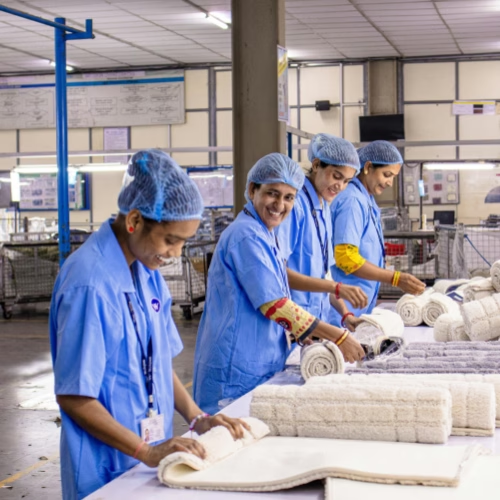
It’s easy to see why staffing firms can make solid profits importing workers. They can fill jobs locals would rather avoid, and they make their own staff supply steadier. The fewer outside options a worker has, the less they’re likely to leave—not necessarily because they love the job, but because it costs too much to quit. That’s the uncomfortable truth here: part of the industry’s margins gets squeezed out of people who can’t easily go elsewhere. It’s not about villains twirling mustaches—it’s just the way power tilts.
That said, this can be done in a more ethical way. Finland really does need workers in some areas, and there are ethical recruitment standards out there. There are Finnish guidelines laying out how to hire foreign employees responsibly. And large firms do offer some real benefits: proper contracts, payroll done right, help with taxes and paperwork, and a way into a pretty tough society for newcomers. Barona, for example, frames its global recruitment as a structured “package,” covering everything from moving help to language classes. When it’s done well, this can actually give people a solid starting point in Finland.
But if things keep trending as they are, Finland could be drifting toward a two-tier labour market. Locals end up with more bargaining power and flexibility, while foreign workers hold up hard-to-fill jobs but have to keep quiet and accept less influence. If family reunification stays strict and permanent residence is harder to get, some workers will live in permanent limbo: here, but never fully settled—unable to build real family lives or speak up at work without risking everything. Official talk might still call this “integration,” but for workers, it’s felt more like a never-ending probationary period.
So in the end, cross-border staffing really is a pretty logical response to worker shortages. But it gets morally tricky when migration law and work culture turn ordinary job frustrations into threats to someone’s whole future in the country. Staffing firms make life easier for employers; the worker can end up paying part of that price—not just financially, but with lost choices, family time put on hold, and a heavy mental toll. Finland stands to gain quite a lot, but only if it does the less glamorous stuff consistently: regular inspections, real protections for whistleblowers, complaint channels that work in reality (not just on paper), and immigration policies that don’t punish people for walking away from a bad boss.
[ Membership ]