

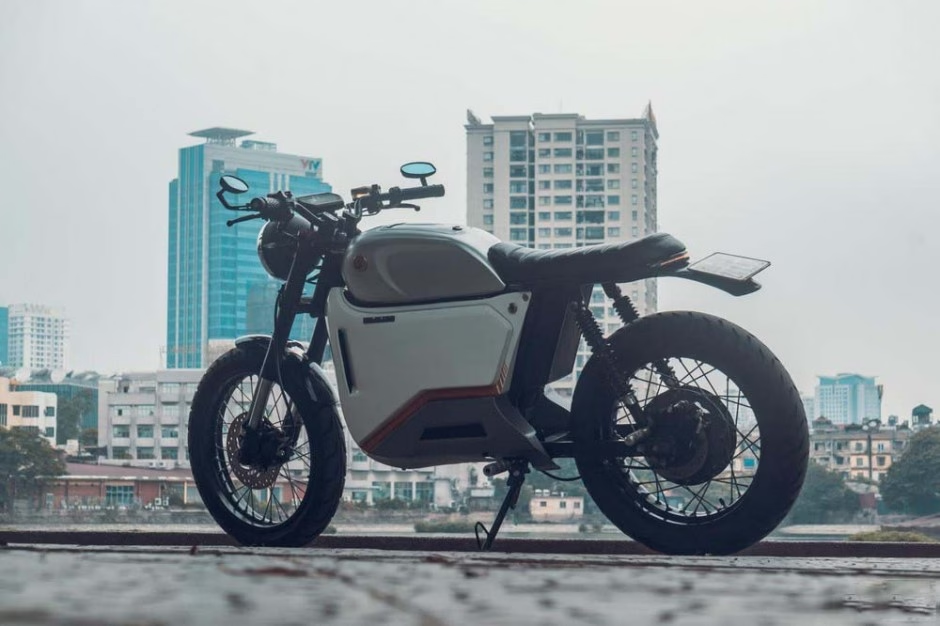
Vietnam’s electric vehicle scene is still new, and Dat Bike stands out as a clear example of early doubt meeting long-term vision. Nguyễn Bá Cảnh Sơn, a former Silicon Valley engineer, launched the company in 2019 with a bold idea: electric motorbikes, not cars, would lead Vietnam’s green transition. Many people at the time thought this was too soon, too risky, and not realistic for business.
This doubt was clear when Dat Bike appeared on Shark Tank Vietnam. The founders faced open criticism on the show. Investors questioned their costs, wondered if Vietnamese riders would really switch to electric bikes, and doubted they could compete with established petrol bike brands. The segment ended with no deal, fitting the usual story of idealistic founders facing tough market realities.
Since then, the real story has been more complex.
In the years since that show, Dat Bike has quietly grown. The company has launched several models, like the Weaver line, and has focused on making high-performance electric motorbikes instead of just cheaper options. Their bikes can go over 100 kilometers on a single charge and accelerate as fast as regular scooters, appealing to city commuters who want both good performance and low running costs. By handling design, assembly, and gradually using more local parts, the team has kept close to both their product and customers, improving quality and learning quickly from the market.
Financially, Dat Bike has avoided the ‘grow at all costs’ strategy. Instead, it has taken a careful approach, first proving demand in Vietnam’s biggest cities instead of trying to expand everywhere or spending heavily on discounts. In 2022, the company raised funds from international investors, showing that global backers were more willing than TV investors to support a long-term change. Since then, Dat Bike has entered other markets like Indonesia, where crowded cities and lots of motorbikes make for a similar setting.
All of this is happening as Vietnam faces bigger changes. In the late 2010s, air pollution in cities like Hanoi and Ho Chi Minh City was so bad that they often ranked among the world’s most polluted. This crisis shifted public opinion and government policy. Now, electrification is not just a niche idea but a clear goal. City governments are making emissions rules stricter, fuel prices are unpredictable, and more young people see electric vehicles as the best choice for modern, responsible city living.
Given this, Dat Bike’s early idea no longer seems unrealistic. It was early, but it was right. Unlike Europe or China, Vietnam is not moving to electric cars first. Instead, the shift is happening with two-wheelers. This means electric motorbikes could become the main way people get around cities in the coming decades, with many cities possibly seeing almost everyone using them. Dat Bike’s choice to focus on this area from the start gives it an advantage that others may find hard to match.
There’s an irony that many in Vietnam’s startup scene have noticed. Some of the people who once dismissed Dat Bike on TV are no longer relevant, while the company they doubted continues to grow and improve. This shows that a strong opinion on TV does not translate into real market success. Confidence based on data, engineering, and real city life usually lasts longer than flashy expertise.
Of course, not every bold startup idea will succeed. But Dat Bike’s story shows something important for founders in new markets: when big trends, government policy, and real customer needs come together, early rejection often has more to do with timing than with whether the idea can work. In Vietnam, the move to cleaner cities was always likely to happen through electric motorbikes. Dat Bike just started down that road before everyone else.
[ Membership ]