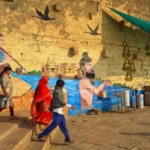


At first glance, Bali seems like a postcard come to life, with its beaches, temples, yoga retreats, and sunsets perfect for Instagram. However, beneath this attractive image lies one of Southeast Asia’s most efficient and resilient tourism economies, serving as a key part of Indonesia’s hospitality sector. This model offers valuable insights for policymakers and investors, highlighting how a well-structured, adaptive tourism system can drive sustainable economic growth and foster long-term resilience, even in challenging times.
Tourism has always been important for Indonesia, but Bali is where this strategy is most visible. The island operates as a mostly self-contained hospitality ecosystem, with an international airport, a range of accommodation options, a skilled service workforce, global supply chains, and a regulatory environment that, while not perfect, generally supports tourism as a long-term economic driver rather than just a quick source of revenue. Before the pandemic, Bali alone contributed approximately 60% of Indonesia’s tourism income and created around 70% of the service-sector jobs related to tourism. When COVID-19 struck, Bali’s recovery tested how quickly Indonesia could restore traveler confidence, rebuild air connections, and support small businesses.
Bali’s economic strength comes not just from the number of visitors, but from how its tourism system is organized. The hospitality market is divided into several segments. At the top, international luxury resorts and branded villas serve high-paying guests from Australia, Europe, East Asia, and an increasing number of long-term digital nomads. In the middle, boutique hotels, guesthouses, and lifestyle accommodations attract more budget-conscious travelers while still keeping occupancy rates high. At the base, family-run homestays and small businesses provide jobs for locals and help distribute income more widely than in many other tourism areas. This structure allows Bali to adapt to economic changes. When the luxury market slows, mid-range and long-stay tourism often help maintain a steady income.
The wider impact of tourism in Bali is also important. The industry supports a large network of small and medium-sized businesses, including food and beverage suppliers, builders, interior workshops, transport services, wellness and spa providers, event organizers, photographers, designers, and other creative professionals. Hospitality is not a separate sector here; it is closely connected to agriculture, crafts, logistics, and a growing digital services industry. Notably, approximately 35% of hotel procurement on the island is sourced directly from Balinese SMEs, underscoring the role of local businesses in supporting inclusive economic growth. This strong network is one reason foreign entrepreneurs continue to invest, despite sometimes uncertain regulations. The ecosystem is broad enough to spread out risk, making investments feel safer.
On the consumer side, Bali’s food scene reinforces its edge in the tourism industry. Food isn’t just an add-on—it’s one of the main reasons people stay longer and come back. Classic dishes like nasi goreng, mie goreng, satay, babi guling, and lawar hold cultural center stage, while a broad international dining landscape reflects the island’s global workforce and visitor mix. You get vegan cafés, Japanese fusion spots, Mediterranean beach clubs, and serious tasting-menu restaurants operating side by side without really cannibalizing each other. That kind of culinary range tends to push up length of stay, repeat visits, and per-capita spending, metrics that matter a lot more than just volume. Visually, Bali continues to offer what travelers want: dramatic coastlines, Ubud’s terraced rice fields, volcanic scenery, and unique cultural spaces that make it stand out from typical beach destinations. This beauty translates into higher prices, as visitors are willing to pay more for experiences that feel both authentic and comfortable, spiritual but still accessible. However, as Bali attracts increasing numbers of visitors, it invites reflection on how to preserve its ceremonial spaces. How can Bali balance growing tourist inflows with the need to protect its cultural heritage, ensuring these special places remain authentic and respected?
Looking ahead, Bali’s main challenge isn’t demand. It’s sustainability—environmental stress, infrastructure overload, and the risk that land and housing become over-financialized and detached from local realities. Indonesia’s policy stance is gradually reflecting that tension, with attempts to both diversify tourism beyond Bali and focus more on quality than sheer volume on the island itself. If that shift is executed well, it could cement Bali’s role as a high-value hospitality hub rather than push it toward becoming a cautionary tale. Economically, Bali is more than just a tourist spot. It serves as an example for Indonesia that, when tourism is well-structured, connected, and rooted in local culture, it can be a strong engine for growth. This approach can survive challenges, attract investment, and turn natural beauty into lasting economic value. Tained economic value.
[ Membership ]