

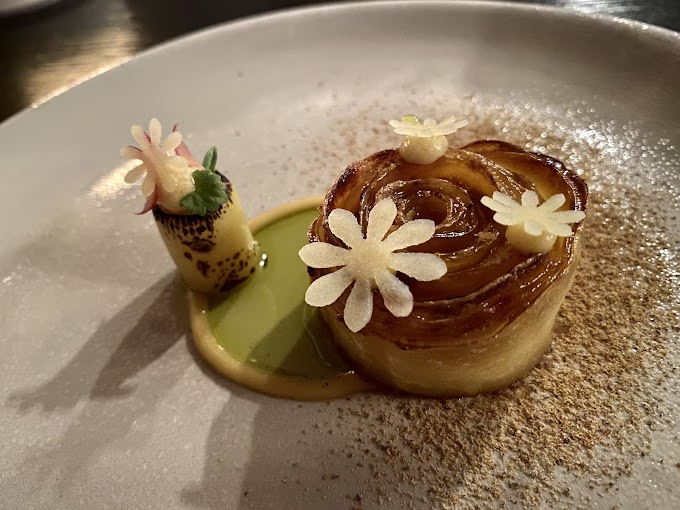
Seven Swans in Frankfurt stands out as Germany’s most economically interesting vegan restaurant. It doesn’t target a broad mainstream audience; instead, it succeeds at the highest end of the market. As a fully vegan, Michelin-starred fine-dining spot, it challenges the common belief in European hospitality that plant-based cuisine can’t command premium prices unless it relies on ideology.
From a business perspective, Seven Swans operates more like a precision service than a typical restaurant. Its menu is focused and seasonal, using carefully managed supply chains, direct sourcing, and even on-site urban farming. This close connection to ingredients helps avoid large swings in commodity prices, but it also means greater labor needs and more complex planning. The restaurant trades raw-material price swings for strict control over its operations.
The choice to be in Frankfurt is deliberate. While Berlin is open to experimentation and lower margins, Frankfurt attracts customers who expect high prices, efficiency, and a business-like dining experience. Business travelers and finance professionals don’t mind the absence of meat; they care more about consistency, timing, and clear value. Seven Swans sets its prices and service style to match these expectations, rather than trying to persuade guests to become vegan.
A key part of its success is avoiding the ethical discount trap that harms many vegan concepts. The prices aren’t presented as a moral appeal, but as payment for labor, expertise, and scarcity. That framing positions vegan fine dining as a premium experience on its own terms rather than as an alternative lifestyle product. By doing this, the restaurant pulls plant-based cuisine away from activist framing and roots it in straightforward market logic.
Labor remains the biggest challenge. High-end kitchens in Germany already struggle to find and retain skilled staff, and vegan fine dining requires even greater specialization. Seven Swans handles this by staying small, keeping the menu limited, and using close, hands-on management. The restaurant chooses not to grow quickly, knowing that expanding would likely reduce both quality and profit margins.
Looking at the bigger picture, Seven Swans reflects broader changes in the European food and beverage industry. Vegan restaurants are no longer limited to casual or quick-service formats. At the highest level, they can now compete directly with traditional fine dining, not by offering lower prices, but by being more precise in their operations. This change signals a move from just accepting veganism for ideological reasons to recognizing its real economic value.
Seen this way, Seven Swans is important not just because it’s vegan, but because it proves that, with the right approach, plant-based dining can follow the same financial rules as top-tier hospitality: being disciplined, careful with money, and confident in its pricing.
[ Membership ]