

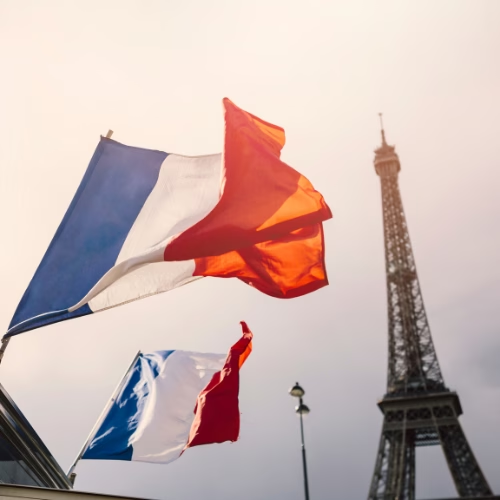
France is not falling apart. Institutions function, public services continue, and families are still protected from the worst economic shocks. Social order, though sometimes noisy, remains in place. On the surface, things work. But underneath, there is a quieter issue: a slow loss of confidence—not in France itself, but in whether the system can still bring progress, opportunity, or even small improvements over time.
If you look at the main numbers, France appears stable. Growth is slow but steady, unemployment exists but is under control, and inflation is lower than in much of Europe. The welfare state still helps prevent the kind of social collapse seen elsewhere. Public debt is high, but people are used to it. Productivity is holding up, and France is still a key part of Europe’s economy. None of this suggests a crisis is about to happen.
And yet confidence is fading.
The problem isn’t a crisis in the classic sense—no currency meltdown, no run on the banks, no explosive unemployment. It’s something more insidious: the sense that effort doesn’t really pay off anymore, that reforms shuffle burdens around without creating real momentum, and that the future will look like today, just a bit tighter and more constrained. In economic terms, that’s dangerous ground. When expectations go flat, investment slows, people take fewer risks, and households shift from planning to simply holding on.
This is clear in the job market. Workers are protected, but this comes at the cost of energy and change. Contracts keep people safe, but also keep many stuck in jobs with few chances to move up. Youth unemployment is low, but young people feel their careers are slow to start and limited. Graduates have skills and jobs, but they are careful and sometimes unsure about accepting work. They work, but often doubt it will lead to more than just keeping their current spot. What once felt like stability now feels more like being stuck.
People feel the same frustration with taxes and regulations. The system is supposed to be fair, but in reality, it is exhausting. Taxes are high, the bureaucracy is complicated, and meeting all the rules takes a lot of effort. Companies manage, but few feel excited. Small and medium businesses are cautious. Entrepreneurs try new things, but carefully, and sometimes from outside the country. The system does not block ambition outright, but it rarely rewards it quickly or clearly enough to rebuild trust.
You can also see the change in how people spend money. French consumers are not poor, but they are careful. Cafés are still full, culture is alive, and luxury brands are doing well. Still, people are spending less on extras, putting off big purchases, and rarely buying out of hope for the future. This is not panic, but doubt. People are not expecting disaster, but they are quietly lowering what they hope for.
In politics, this appears as ongoing unrest, not total breakdown. Protests keep happening, reforms tire people out, and trust in institutions is slowly fading, not disappearing. People protest not because nothing works, but because what is there feels unresponsive. The government keeps running, but it is less able to win people’s trust. People are tired of reforms, not because there is no change, but because the changes feel small, technical, and far from daily life.
The challenge is that confidence cannot simply be ordered back. It does not return just because of subsidies or careful reforms that keep things steady but do not make real progress. People need to see real results—clear proof that effort matters, that moving up is possible, and that the future can truly improve in ways they can notice. France’s system is great at stopping collapse, but not as good at showing real progress.
This is the main paradox: France is strong enough to avoid crisis, but too rigid to inspire hope. In the long run, this is more important than the main economic numbers. Economies do not usually fail suddenly; they slow down when people stop expecting things to get better.
France does not need to be rescued. It needs to believe in itself again.
[ Membership ]