

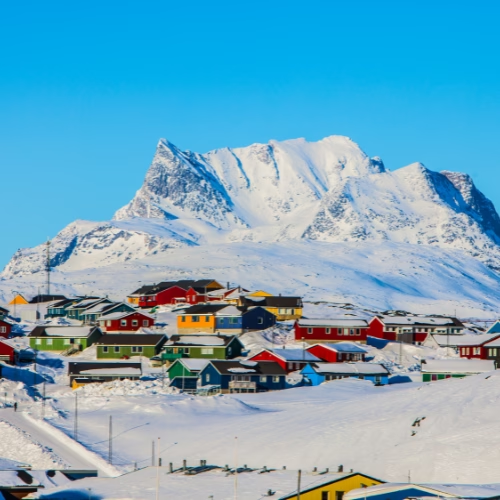
Greenland doesn’t get much attention globally, but there’s more happening here than most people think. If you look far back in time, before global trade or military strategy mattered, it was the land that shaped Greenland, not politics. The island is huge—bigger than all of Western Europe—but very few people live here. Most residents are in small communities along the tough, icy coast, where daily life means dealing with the sea, wind, and cold. For generations, the Inuit found smart ways to adapt. Their traditions of living, hunting, and trading focused on surviving tough conditions, not on making extra or chasing profits. This deep connection to nature still shapes Greenland today, which is why its path is so different from most industrialized countries.
When it comes to money, Greenland is a small player. It’s open to the world, but faces big practical challenges. Distance here isn’t just a map detail—the climate and high costs of building and maintaining anything make everything more expensive. These real obstacles affect prices, job options, and whether new investments make sense. Fishing has always been the backbone of the economy, not by choice, but because the nearby seas are one of the few steady sources of income. This means Greenland is vulnerable when fish prices drop or stocks decline. So, instead of chasing rapid growth, people here usually prefer a safe, steady approach. In simple terms, with limited resources, the key is being able to recover—not just growing for its own sake.
Now, the world is noticing Greenland for new reasons. It’s not that the island is seeking attention, but it has become important in a new way. Beneath the ice and rock, Greenland holds rare earth elements and minerals that are vital as the world moves toward electric cars, digital technology, and advanced manufacturing. But this isn’t a gold rush. The tough landscape makes mining slow and difficult. Success here requires long-term thinking, patient investors, careful planning, and real partnerships. Trying to make quick profits simply doesn’t work.
The good news is that this approach matches Greenland’s way of doing things. The workforce is small, but people are skilled at surviving tough conditions and dealing with the long waits that come with living remotely. There’s a strong focus on stability, protecting the environment, and keeping income steady, rather than rushing into big new industries. If outside companies want to get involved, they can’t just set up and move forward on their own. They need to work with local people, respect strict environmental limits, and help build the infrastructure everyone needs, not just what benefits business.
Looking to the future, Greenland won’t be flooding the world with resources. Instead, it offers something many countries need right now: reliability. With supply chains under pressure and risks increasing, Greenland serves more as a smart backup than a main supplier. Its real strength is being steady, open, and predictable. The focus is on long-term agreements and cooperation, not quick profits or rapid expansion. In Greenland, trust and understanding matter more than just the numbers.
Greenland may never be the biggest player in the global market, but it could become one of the most important in its own way. The island’s story is about patience, discipline shaped by its geography, and people who stay grounded in daily realities. For countries and companies seeking true resilience rather than just the next big thing, Greenland is more than another frontier. It’s a partner that encourages you to slow down, listen, and work together.
[ Membership ]