

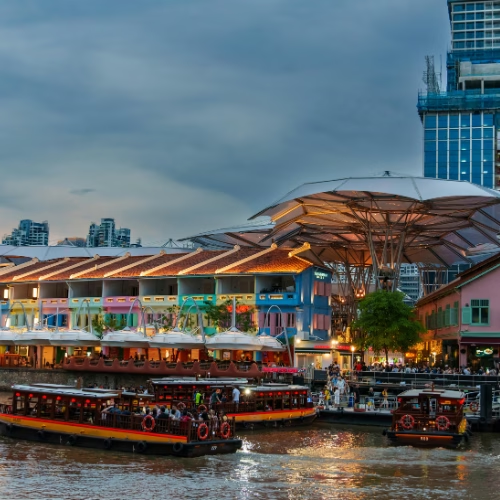
Singapore is often seen as a model city-state: efficient, orderly, predictable, and impressively well run. From infrastructure to public administration, few places carry out policy with such precision. On paper, the system seems almost flawless. Growth is steady, institutions are widely trusted, public services work well, and crises are managed quickly and decisively. But living in this kind of system feels more complicated than the numbers show.
This efficiency is no accident. Rules are clear, enforcement is steady, and long-term planning shapes almost every policy. This creates a business environment that investors appreciate. Contracts can be trusted, corruption is rare, and while the bureaucracy is strict, it is also predictable, which reduces uncertainty for companies. For the economy, this means stability. For individuals, though, the trade-offs are more subtle and don’t appear in economic statistics.
Daily life here is focused on efficiency. Trains arrive on time, public housing is given out through clear systems, and services are designed to be as smooth as possible. It’s definitely convenient. Still, there’s a quiet feeling that everything follows set paths. The economy rewards discipline, following the rules, and planning ahead. People do take risks, but they are usually careful ones. Socially, failure isn’t accepted the way it might be in more relaxed places, and this affects how people think about their careers and life choices.
The cost of living is where the system feels personal. Housing, car ownership, education, and healthcare are all managed through logical systems, but they still need constant financial planning. Most Singaporeans aren’t impulsive spenders. They plan ahead. The pressure isn’t from chaos, but from precision. Every big decision becomes a careful calculation. Getting married, buying a flat, changing jobs, or having kids—all of these are weighed against long-term financial stability. The system works, but it always reminds you of the price of stability.
Work culture follows the same pattern. Productivity, reliability, and clear results matter a lot. Careers are usually built step by step, not through big jumps, and people’s professional identity is closely linked to how well they perform. This creates a skilled workforce. But it also brings a quieter kind of anxiety—the feeling that the system will keep moving forward, whether you can keep up or not. Job security, once taken for granted, is now a real concern as global tech changes, offshoring, and automation change the job market. Now, people focus not just on getting ahead, but on staying relevant.
From a business perspective, Singapore has matured. The era of aggressive, fast-growth startups has slowed down. Now, investors prefer sustainability, following the rules, and real profits over flashy stories. This has created a business scene that is less showy but more stable. Companies that last here are usually well-structured, connected to the region, and very disciplined in how they operate. Singapore doesn’t reward making a lot of noise. It rewards getting things done well.
People often overlook the emotional side of living in such a tightly managed system. Efficiency reduces waste, but it can also make life feel more compressed. When almost everything works, it’s harder to describe what feels wrong. There isn’t much obvious chaos to resist, but people still feel pressure building up. Mental health is talked about more now, not because the system is failing, but because it runs so constantly. Once basic needs are met, people start quietly asking what gives life meaning.
Singapore’s real strength is its long-term way of thinking—across the economy, society, and institutions. It values lasting stability over excitement. This is a big advantage for businesses and the government. For individuals, though, it means always having to adjust. Life here isn’t chaotic; it’s very carefully managed. That’s the main paradox: the same system that keeps things safe and predictable also expects people to keep adjusting themselves to fit in.
Singapore doesn’t promise an easy life. It offers order. The people who succeed here aren’t always the boldest or the loudest, but usually the most precise—those who understand how the system works, accept what it asks for, and learn how to live with purpose inside something built to keep running almost all the time.
- What Singapore Sees in Nordic Businesses
- Singapore’s Aviation Rebound: A Good Job Engine for a Nervous Youth Labor Market
[ Membership ]