
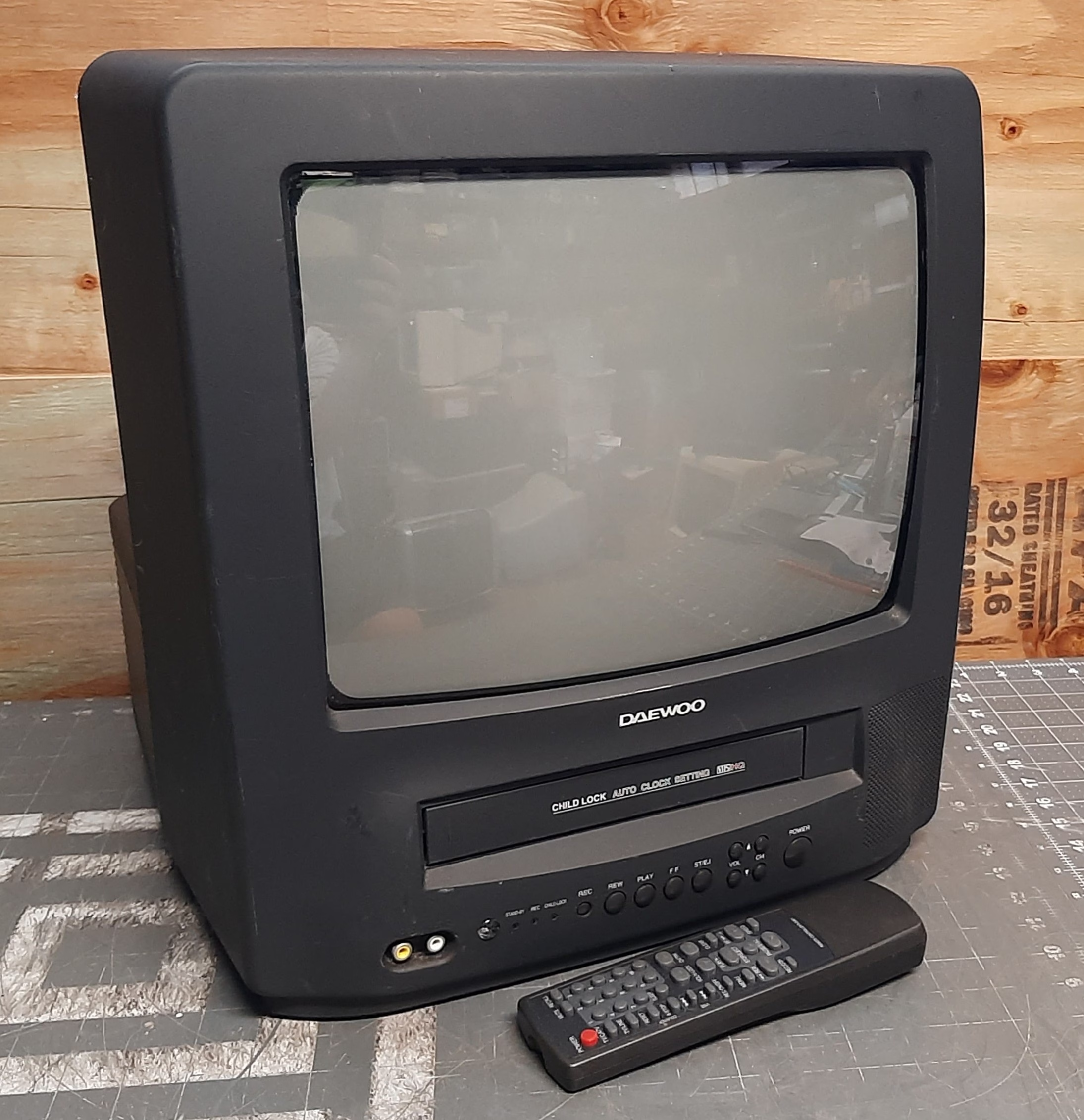
For many people, especially across Asia, hearing the name Daewoo brings back a flood of memories. If you grew up in the ’90s, there’s a good chance there was a Daewoo TV in your house. It wasn’t there to impress anyone or make a statement; it just worked. Those TVs lasted for years, handled power surges, humid summers, and the general chaos of family life. For many families, it was even their first real appliance. That kind of emotional connection matters, and it gets to the heart of the Daewoo story: the products themselves were usually solid, but the company behind them was on shaky ground. Yet, even as the screen flickered to life each evening, a small voice of uncertainty whispered about the company’s future, hinting that stability might be more illusion than reality.
Daewoo didn’t fall apart because no one wanted its TVs or cars, or because its products were bad. The real problem was all about money, or more specifically, how the company was run behind the scenes. Back in the ’80s and early ’90s, South Korea’s chaebol system, which means large, family-owned conglomerates, focused on getting bigger, moving faster, and expanding globally, almost at any cost. One key financial tactic these conglomerates used was cross-guarantees, where different subsidiaries would back each other’s debts, creating a web of inter-company debt chains that magnified financial risk. Daewoo followed this approach more than most. They jumped into cars, electronics, shipbuilding, construction, trading, finance—if you can name it, they tried it. Many of these ventures didn’t make much money and carried a lot of risk, but that didn’t slow them down. For Daewoo, growing bigger was the goal, not actually making steady profits.
The real problem was how Daewoo paid for all this expansion: debt. They kept borrowing, thinking that as long as the economy kept going and the government supported them, they would always be able to refinance. Inside the company, things were not much clearer. Subsidiaries supported each other, finances became confusing, and losses were quietly hidden for as long as possible. On paper, they looked huge and successful, but underneath, the money was not flowing as smoothly as it seemed. When the Asian Financial Crisis hit in 1997, Daewoo’s whole approach collapsed almost overnight. Suddenly, it became much harder to borrow money. International lenders quickly backed away, South Korea’s currency dropped sharply, and all that debt Daewoo had been juggling became a mountain they could not climb.
What set Daewoo apart from other big Korean conglomerates was not that they got caught in the crisis; almost everyone did. The difference was that companies like Samsung and Hyundai had already started cutting back on side businesses and trying to get their finances in order. For instance, in the late 1990s, Samsung’s debt-to-equity ratio was around 70%, a stark contrast to Daewoo’s staggering financial liabilities. Daewoo did the opposite: they kept borrowing and insisted publicly that there was not really a problem. By the end, their debts had piled up to more than $80 billion, creating a debt-to-equity ratio that exceeded 500%. There was no way to save them without risking a much bigger economic mess.
The fallout was massive. Hundreds of thousands of people either lost their jobs or felt the impact in other ways. For instance, consider the story of Min-Jun, a Daewoo employee for over a decade. He had spent years honing his skills, believing in the stability of the conglomerate. Suddenly, he found himself without a job, facing an uncertain future in a rapidly shrinking job market. His story was one of many, each with its own challenges and heartaches. Banks were left with loans that would never be repaid, so the government had to step in and clean up the mess. Foreign investors, already nervous after the crisis, saw all this and began to doubt how open and honest Korean companies really were. It wasn’t just about money; the country’s reputation suffered too. The story everyone believed about Korea’s economic ‘miracle’ suddenly looked much shakier to the rest of the world.
But this crisis forced change. Daewoo’s collapse became a warning sign, a clear reminder not to let it happen again. Afterward, the Korean government managed to push through a series of reforms that might have been impossible before. There were new accounting rules, limits on risky cross-company debt promises, and much more pressure on these large companies to focus on what they did best, instead of trying to build mini-empires. Banks were shaken up and watched more closely, and people stopped assuming that every big company would be rescued if it made mistakes.
The main lesson for South Korea was clear: doing well in business, even making great products, does not excuse poor financial management. It does not matter how many TVs you sell or how proud you make the country; if the foundation is weak, the whole thing can still fall apart. Daewoo’s sturdy TVs lasted for years, but that did not mean Daewoo itself was built to last. Both things can be true, and that is why the company’s collapse felt so surprising to so many people.
In the end, Korea came out stronger. Facing these harsh truths made Korean companies much more careful with debt, more aware of the global financial scene, and less willing to bet their future on silent government support. The chaebol system did not disappear, but it changed because it had to.
If you are interested in economics, Daewoo is a perfect reminder: just because a product lasts does not mean the company or the country behind it will too. For policymakers, it is a warning not to confuse size with real strength. For families who remember watching their Daewoo TVs late into the night, the story is a bit bittersweet. It shows how personal memories and major economic forces do not always match up, but together they make up the real, complicated history.
[ Membership ]