

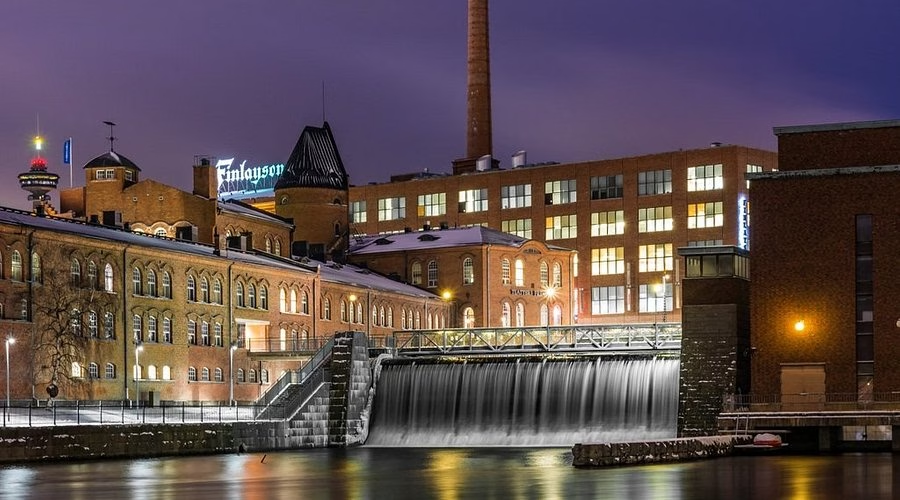
There’s a quiet ritual that plays out over and over in Northern Europe—Finland especially. Companies here rarely go out in a blaze. You usually won’t see messy scandals or spectacular collapses. What happens instead? They change their skin. One holding company quietly fades away, a shiny new legal entity pops up, the brand carries on, and—if you peek behind the curtain—almost everything stays the same. To a casual observer, it can look like resilience. For investors, though, it starts to feel a bit like déjà vu.
Finlayson is the most recent, and maybe the clearest, example of what you might call this “old bottles, new wine” trick. The name is still there. The story gets a little tweak. Scratch beneath the surface, though, and the business is still facing the same stubborn problems.
To clarify a detail that gets misunderstood: Finlayson was never a stock-market company. You won’t find Manna & Co Oy, or its next version, on the Nasdaq Helsinki. No ticker, no shares for the average person. Instead, a mix of private investors, funds, and people with a stake in the strategy took part. And these investors? For the most part, they were the ones left holding the bag when things soured.
You might think, okay, so the public didn’t lose money—great. But money was still lost, just behind the scenes.
A Heritage Brand Stuck in the Modern Nordic System
Finlayson gets a lot of love as a centuries-old success story. But the actual picture is messier. Over two centuries, the company has changed hands repeatedly. It isn’t a story of an unbroken family business from the 1800s to now. Over the years, Finlayson moved out of the factory-and-workforce era and became more of a brand than a real manufacturer.
By the time Manna & Co Oy rolled around, Finlayson was basically just a name. The actual production? Gone from Finland. Outsourced somewhere cheaper. What was left was mainly the idea of Finlayson—the nostalgia, the perceived Finnish heritage, the emotion in the branding.
Even as the product itself shifted overseas, prices somehow crept higher and higher, landing squarely in premium territory. Yet, the products weren’t Finnish-made anymore—they were probably from Asia or similar. So what was the real selling point? Mostly “Nordic values,” “timeless design,” and responsible-sounding branding.
It gets hard to ignore the disconnect. A bedsheet made in China, sold at luxury prices, gets its value from the story, not the thread count. That kind of narrative-driven business only works so long—especially as the economy tightens.
Why Nordic Companies Survive, But Don’t Really Grow
Culture plays a big role here.
Finnish business culture leans toward caution, consensus, and a sort of institutional patience. It’s great for keeping things stable. Not so great if your goal is to grow fast or become a world-conquering brand.
So, instead of pushing the big question—“How do we actually make more money?”—the system usually asks: “How do we stay afloat for another year without any drama?”
When times get tough, the answer isn’t revolution. It’s endurance. Stretch every euro, shuffle the leadership, reshuffle legal paperwork. If the holding company is sinking, let it sink, but keep the brand alive on a new balance sheet.
Legally, it makes sense. Economically, though, it often just hides the cracks.
Who Actually Loses Out?
Not the brand. Not the managers. Not the story they’re selling.
The real losses land on:
- Private equity investors
- Minority shareholders, if there were any in these companies
- Creditors without strong collateral
- Longtime partners who bought into the idea of “Nordic stability”
Usually, equity just quietly disappears. The losses don’t make headlines. There’s no big dramatic fallout—just another polite reset.
What’s odd is that it’s often the same people, sometimes even the same executives, who show up in the new company structure. It’s not usually fraud. The system is just built so that as long as the paperwork checks out, things carry on—almost as if nothing happened.
This isn’t just about Finlayson. This pattern pops up all over the Nordic business world.
The Luxury Illusion
One thing that stands out: pricing. A lot of Nordic brands sell themselves like they’re on the same level as true luxury labels. Problem is, they don’t have the global reach, polish, or craftsmanship to back it up.
So you end up with brands in this weird in-between spot:
- Too pricey for most shoppers
- Not quite glamorous enough for real luxury buyers
- Too protected, culturally and perhaps socially, to simply fail and disappear
In that kind of setup, bankruptcy isn’t the end. It’s just another maintenance routine.
Survival Isn’t Quite the Same as Success
Dressing up the same business in a new legal costume doesn’t fix lousy management, narrow profits, or a muddled brand direction. It just puts off having to deal with them.
Finland is incredibly good at keeping its companies ticking along, even when things aren’t great. But turning those brands into global powerhouses? Not so much.
What does this mean for shoppers? You might pay luxury prices for what is, in reality, mostly “heritage.” And for investors, the harsh truth comes too late: stability isn’t growth, and history isn’t performance.
So the big question for Finland—and maybe its neighbors—isn’t answered yet: If companies can survive for years without changing or growing, by just reshuffling themselves, who’s really benefiting in the end?
That’s still an open question.
[ Membership ]